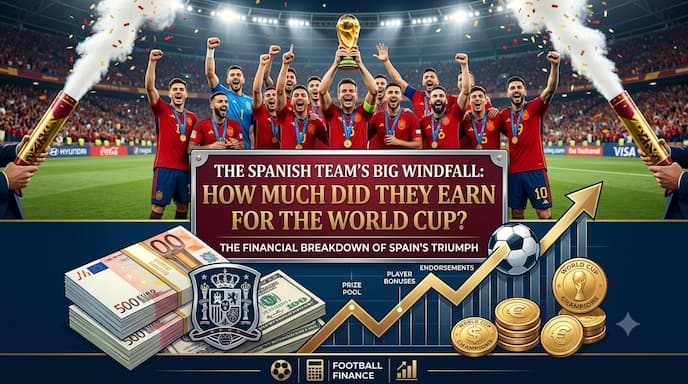
Winning the FIFA World Cup is the absolute pinnacle of a football player’s athletic career. Yet beyond the iconic gold trophy, global stardom, and national pride lies a massive financial windfall. When Spain’s national team (La Roja) stands victorious on the global stage, winning the tournament yields millions of dollars in performance bonuses, federation prize money, commercial endorsements, and heavy tax revenue.
For financial analysts and sports economy enthusiasts, understanding how World Cup earnings are structured reveals a fascinating ecosystem of prize pools, labor negotiations, and taxation. Here is a comprehensive breakdown of how much money each Spanish player earns for winning the World Cup, where the funds originate, and what actually lands in their bank accounts after taxes.
1. The Numbers: Spain’s World Cup Earnings Across the Eras
Bonus packages negotiated between team captains and the Royal Spanish Football Federation (RFEF) have scaled dramatically alongside the growth of global football broadcasting rights.
| World Cup Edition | Prize Pool Allocation to RFEF | Gross Bonus per Player | Net Estimate (After Spanish Taxes) |
| 2010 South Africa (Men) | ~$30.0 Million | €600,000 (~$780,000) | ~€330,000 |
| 2023 Australia/NZ (Women) | $10.5 Million | $270,000 (Direct FIFA) | ~$143,000 |
| 2026 USA/MEX/CAN (Men) | $50.0 Million | €750,000 (~$815,000) | ~€397,500 |
The Evolution of the Winning Bonus
- 2010 (South Africa): When Spain captured its first star in Johannesburg, each of the 23 players received a gross bonus of €600,000. At the time, this was the highest bonus ever paid to a national team in football history. YouTube
- 2023 Women’s World Cup: FIFA introduced a historic landmark structure by guaranteeing direct individual payments to players rather than leaving distribution entirely to national associations. Every player on Spain’s championship squad received $270,000 directly from FIFA out of the overall $10.5 million federal allocation. Business Stats
- 2026 World Cup: Under agreements struck between team captains and the RFEF, each member of the 26-man squad secured a gross payout of €750,000 for lifting the trophy, marking a 25% increase over the 2010 benchmark. YouTube
2. Where Does the Money Come From?
Contrary to common belief, player bonuses for national team duty are not paid directly out of taxpayer dollars or standard domestic league salaries. Instead, they stem from a multi-tiered commercial mechanism:
                  ┌────────────────────────┐
                  │    FIFA Prize Pool     │
                  └───────────┬────────────┘
                              │
                  ┌───────────▼────────────┘
                  │  RFEF (Spanish Fed.)   │
                  └───────────┬────────────┘
                              │
        ┌─────────────────────┴─────────────────────┐
        │                                           │
┌───────▼────────┐                         ┌────────▼────────┐
│ Player Bonuses │                         │ Federation Operations │
│ (Approx. 40-45%)│                        │ (Grassroots, Travel)  │
└────────────────┘                         └─────────────────┘
- FIFA Prize Pool Distributions: FIFA allocates a massive financial pool for the tournament funded by global TV rights, ticket sales, and corporate sponsorships. The winning federation receives around $44–$50 million.
- RFEF Collective Bargaining Agreement: Prior to the tournament, team captains negotiate a split with the federation. Typically, around 40% to 45% of FIFA’s total championship prize payout is allocated to player and coaching staff bonuses, with the remainder retained by the federation to fund youth development, infrastructure, and operational travel.
- Sponsorship & Commercial Triggers: Individual player contracts with footwear and apparel brands (such as Nike, Adidas, and Puma) frequently contain «trophy clauses.» Winning a World Cup can trigger personal performance bonuses ranging from $100,000 to over $1,000,000, depending on the player’s marketability and profile.
3. The Taxman’s Cut: Spanish Hacienda and Net Earnings
While €750,000 or $270,000 sounds like an extraordinary payday for a month of work, a significant portion never reaches the player’s personal investment portfolio.
The Tax Structure
- Top Marginal Income Tax Rate: Spanish tax law treats national team bonuses as regular employment income. For tax residents in Spain, high earners fall into the top personal income tax bracket (IRPF), which sits at approximately 47% (combining state and regional autonomous rates in regions like Madrid or Catalonia).
- Non-Resident Players: Squad members who reside and pay taxes outside Spain (e.g., players competing in the English Premier League or French Ligue 1) are subject to non-resident tax treaties (IRNR), generally paying a flat 24% tax rate to the Spanish tax authority on money earned on Spanish soil, while declaring the remaining income in their home fiscal residence.
Example Calculation for a Resident Spanish Player (€750,000 Bonus):
- Gross Bonus: €750,000
- Estimated Tax (Hacienda ~47%): -€352,500
- Estimated Net Take-Home Pay: €397,500
4. Financial Impact Beyond the Cash Bonus
For high-earning elite stars whose club salaries might already reach €5 million to €20 million annually, a net bonus of €400,000 represents a modest percentage of their annual revenue. However, for younger players, backup goalkeepers, or squad members from smaller clubs, the financial trajectory changes completely.
The Long-Term Financial Valuation
- Market Value Boost: Winning a World Cup acts as a stamp of global excellence. On average, squad members experience a 15% to 30% surge in transfer valuation, strengthening their leverage during upcoming club contract negotiations.
- Post-Career Endorsement Tailwinds: Being a World Cup winner creates a lifelong financial annuity. Former champions routinely secure lucrative post-career ambassadorial roles, commentary contracts, and corporate speaking engagements due to their historic status.
Conclusion: An Executive Bonus on the World’s Biggest Stage
From a financial standpoint, the World Cup bonus system operates much like an executive performance bonus in corporate finance. FIFA acts as the parent corporation distributing capital, the RFEF functions as the subsidiary managing overhead, and the players serve as executive performers receiving milestone-based equity and cash incentives.
While lifting the World Cup trophy represents the pinnacle of sporting achievement, the monetary reward—structured through negotiated federation payouts and heavily taxed by domestic authorities—demonstrates how elite modern sports remain seamlessly intertwined with high-level financial management
