How to Invest from Scratch: A Beginner’s Guide (2026
Building Your Wealth from Zero
In the information age, the biggest obstacle for the novice investor isn’t a lack of options, but rather an excess of them. Every day, new «gurus» appear promising astronomical returns through «magic» strategies. However, at FinanzasElite.com, we stand for transparency and solid financial education.
If you have accumulated savings and feel they are losing value in a traditional bank account, you are right. Inflation is the silent tax that eats away at your purchasing power. To fight it, investing is no longer an option—it’s a necessity. In this article, we break down the five most interesting paths to get started, analyzing their difficulty, profitability, and real risks based on the experience of investors with over a decade in the market.
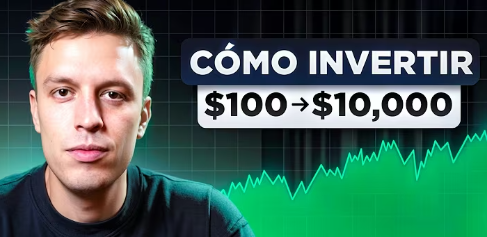
(Video by Adrián Sáenz on how to invest)
1. ETFs: The Democratization of the Stock Market
To understand what an ETF (Exchange Traded Fund) is, we first need to understand what a stock is. Buying a stock means owning a piece of a company (like Apple or Amazon). The problem for a beginner is: how do you know which company will go up?
This is where ETFs come in. Imagine a basket containing hundreds of different stocks. By buying a share of that basket, you become an indirect owner of all those companies.
The Most Popular Indices:
- S&P 500: This index tracks the 500 largest companies in the U.S. It is the thermometer of the global economy. Its average annual return over the last 10 years has been 11.2%.
- MSCI World: If the S&P 500 feels under-diversified, the MSCI World includes over 1,000 companies across multiple countries and sectors (U.S., Europe, Asia). Its historical return hovers around 11.1%.
Accumulating vs. Distributing:
- Distributing ETFs: They pay dividends directly into your account. Ideal if you seek immediate passive income, though less tax-efficient as you pay taxes on every payout.
- Accumulating ETFs: The fund automatically reinvests dividends, boosting compound interest and allowing you to defer taxes until you decide to sell.
Difficulty: Medium. While the concept is simple, choosing between different providers (Vanguard, iShares, BlackRock) can be confusing at first.
2. REITs: The Real Estate Market in the Palm of Your Hand
Traditionally, real estate investing required hundreds of thousands of dollars, dealing with mortgages, and managing tenants. REITs (Real Estate Investment Trusts) change the game. These are publicly traded companies whose primary business is buying, managing, and renting properties.
Why are they so attractive? REITs are legally required to distribute the majority of their profits as dividends. This makes them a favorite for those seeking recurring income.
- Prologis: Specialized in logistics and warehouses, it has delivered an average annual return of 14.1% (stock appreciation alone).
- Realty Income: Known as «The Monthly Dividend Company,» it pays dividends every month, allowing for easy financial planning.
Difficulty: Medium. It requires researching what type of properties each REIT specializes in (offices, data centers, hospitals, or malls), as each sector reacts differently to the economy.
(Special thanks to Adrián Sáenz’s video for informing this beginner’s guide).
3. Cryptocurrencies: The 21st Century Digital Asset
Bitcoin and Ethereum are no longer niche experiments; they are assets held by major financial institutions. Their appeal lies in decentralization and growth potential, but they come with extreme volatility.
Staggering Returns:
- Bitcoin (BTC): Averaged an 82% annual return over the last decade.
- Ethereum (ETH): Reached 127% annually.
However, these figures have a «catch.» To earn that 82%, many investors had to endure crashes of up to 84% in value. Not everyone has the stomach to see their portfolio drop by half in a matter of weeks.
The Golden Rule: Self-Custody If you choose to invest in crypto, the most important security recommendation is using a cold wallet (a physical device like a USB). Leaving your coins on an exchange carries the risk of hacks or company bankruptcy. «Not your keys, not your crypto.»
Difficulty: High. The technical ecosystem is complex, and there are many «scam» projects or memecoins that can take your investment to zero.
4. Interest-Bearing Accounts: The Refuge from Volatility
There is an investor profile that simply wants their money to grow without ever seeing a «red» number. For them, interest-bearing accounts are the best option.
These accounts work similarly to a deposit but with immediate liquidity. Currently, you can find options offering around 2.75% annually.
Safety and Guarantees: The most important factor is ensuring the platform is regulated (e.g., by the BaFin or CNMV) and covered by a Deposit Guarantee Fund, which protects up to €100,000 per client. Technically, it is one of the safest investments in the world.
Difficulty: Low. It only requires opening an account and making a transfer.
5. Gold: Your Portfolio’s Life Insurance
Gold doesn’t pay dividends or interest, so why invest? Because of its role as a store of value. When the stock market crashes or geopolitical instability rises, gold acts as a safe haven.
In the last 10 years, gold has returned 8.7% annually. There are two ways to buy it:
- Physical: Bars or coins. It’s «romantic» but impractical (requires safes and insurance).
- Physical Gold ETFs: You buy a security representing gold held in a professional vault. It’s cheaper, liquid, and easier to manage.
Difficulty: Low. It is a unique asset and easy to understand.
Risk Analysis: The Concept of «Maximum Drawdown»
A grave mistake for beginners is looking only at returns. To be an elite investor, you must look at volatility. Here is the largest drop these assets have suffered in the last 10 years:
- Bitcoin: -84% (took 721 days to recover).
- Ethereum: -94% (took 781 days to recover).
- S&P 500: -55% (took 355 days to recover).
- Gold: -44% (took 1,314 days to recover).
- Interest Accounts: 0% drop.
This data is crucial: investing is not just about winning; it’s about staying calm when the market crashes so you don’t sell at the worst possible moment.
Final Strategy: Diversification is Your Only «Free Lunch»
At FinanzasElite.com, we believe the best strategy for a beginner is a diversified portfolio. Don’t put all your eggs in one basket.
Sample Balanced Portfolio (Theoretical Example):
- 50% in Stock ETFs (S&P 500 or MSCI World): The growth engine.
- 20% in REITs: For recurring passive income.
- 15% in Gold: As protection against crises.
- 10% in Interest-bearing accounts: Cash available for emergencies.
- 5% in Cryptocurrencies: A small high-growth technological bet.
Conclusion
Investing is a marathon, not a sprint. The most important thing isn’t how much you invest today, but when you start. Time is the best ally of compound interest. Educate yourself, diversify, and above all, act with patience and discipline.
Disclaimer: This article is for educational purposes only. Investing involves risk, and past performance does not guarantee future results. Consult with a financial advisor before making significant decisions.
1. ETFs: La Democratización de la Bolsa
Para entender qué es un ETF (Exchange Traded Fund), primero debemos entender qué es una acción. Comprar una acción significa poseer un fragmento de una empresa (como Apple o Amazon). El problema para un principiante es: ¿cómo saber qué empresa subirá?
Aquí entran los ETFs. Imagina una cesta que contiene cientos de acciones diferentes. Al comprar una participación de esa cesta, te conviertes en dueño indirecto de todas esas empresas.
Los índices más populares
- S&P 500: Este índice agrupa a las 500 empresas más grandes de Estados Unidos. Es el termómetro de la economía mundial. Su rentabilidad media anual en los últimos 10 años ha sido del 11,2%.
- MSCI World: Si el S&P 500 te parece poco diversificado, el MSCI World incluye más de 1,000 empresas de múltiples países y sectores (EE. UU., Europa, Asia). Su rentabilidad histórica ronda el 11,1%.
Acumulación vs. Distribución
Una duda común es qué hacer con los dividendos (los beneficios que las empresas reparten a sus accionistas).
- ETFs de Distribución: Te pagan el dinero en tu cuenta. Es ideal si buscas ingresos pasivos inmediatos, pero fiscalmente es menos eficiente porque debes pagar impuestos cada vez que recibes el cobro.
- ETFs de Acumulación: El propio fondo reinvierte automáticamente los dividendos, lo que potencia el interés compuesto y te permite diferir el pago de impuestos hasta que decidas vender.
Dificultad: Media. Aunque el concepto es simple, elegir entre las distintas gestoras (Vanguard, iShares, BlackRock) puede ser confuso al principio.
2. REITs: El Sector Inmobiliario en la Palma de tu Mano
Tradicionalmente, invertir en inmuebles requería cientos de miles de euros, lidiar con hipotecas y gestionar inquilinos. Los REITs (Real Estate Investment Trusts) cambian las reglas del juego. Son empresas que cotizan en bolsa y cuya actividad principal es comprar, gestionar y alquilar propiedades.
¿Por qué son tan atractivos?
Los REITs están obligados por ley a repartir la mayor parte de sus beneficios en forma de dividendos. Esto los convierte en los favoritos de quienes buscan ingresos recurrentes.
- Prologis: Especializada en logística y almacenes, ha entregado una rentabilidad media del 14,1% anual (solo en revalorización de la acción).
- Realty Income: Conocida como «The Monthly Dividend Company», paga dividendos cada mes, lo que permite una planificación financiera muy cómoda para el inversor particular.
Dificad: Media. Requiere investigar en qué tipo de inmuebles se especializa cada REIT (oficinas, centros de datos, hospitales o centros comerciales), ya que cada sector reacciona distinto a la economía.
Gracias a este video de Adrián Sáenz hemos podido hacer este artículo para principiantes.
3. Criptomonedas: El Activo Digital del Siglo XXI
Bitcoin y Ethereum ya no son experimentos de nicho; son activos que forman parte de las carteras de grandes instituciones financieras. Su gran atractivo reside en su descentralización y su potencial de revalorización, pero vienen acompañados de una volatilidad extrema.
Rentabilidades de infarto
- Bitcoin (BTC): Ha promediado un 82% de rentabilidad anual en la última década.
- Ethereum (ETH): Ha alcanzado un 127% anual.
Sin embargo, estas cifras tienen «truco». Para ganar ese 82%, muchos inversores tuvieron que soportar caídas de hasta el 84% en su valor. No todo el mundo tiene el estómago para ver su cartera reducirse a la mitad en cuestión de semanas.
La regla de oro: Custodia propia
Si decides invertir en cripto, la recomendación de seguridad más importante es usar una wallet fría (un dispositivo físico similar a un USB). Dejar tus monedas en una plataforma de intercambio (exchange) implica un riesgo de hackeo o quiebra de la empresa. «Si no son tus llaves, no son tus criptos».
Dificultad: Alta. El ecosistema técnico es complejo y hay muchos proyectos «estafa» o memecoins que pueden llevar tu inversión a cero.
4. Cuentas de Intereses: El Refugio de la Volatilidad
Hay un perfil de inversor que simplemente quiere que su dinero crezca sin ver nunca un número rojo. Para ellos, las cuentas de intereses son la mejor opción.
Estas cuentas funcionan de manera similar a un depósito, pero con liquidez inmediata. El banco utiliza tu capital para depositarlo en el Banco Central Europeo (BCE), y te devuelve una parte del interés que el BCE les paga a ellos. Actualmente, se pueden encontrar opciones que ofrecen alrededor del 2,75% anual.
Seguridad y Garantías
Lo más importante aquí es que la plataforma esté regulada por entidades como la BaFin o la CNMV y que cuente con el Fondo de Garantía de Depósitos, que protege hasta 100.000 € por cliente en caso de quiebra de la entidad. Es, técnicamente, una de las inversiones más seguras del mundo.
Dificultad: Baja. Solo requiere abrir una cuenta y realizar una transferencia.
5. El Oro: El Seguro de Vida de tu Cartera
El oro no genera dividendos ni intereses, entonces, ¿por qué invertir en él? Por su valor como reserva de valor. Cuando la bolsa cae, la inflación sube o hay inestabilidad geopolítica, el oro suele actuar como un refugio seguro.
En los últimos 10 años, el oro ha rendido un 8,7% anual. Existen dos formas de adquirirlo:
- Físico: Lingotes o monedas. Es romántico pero poco práctico (requiere cajas fuertes y seguros).
- ETFs de Oro Físico: Compras un título que representa oro custodiado en una bóveda profesional. Es más barato, líquido y sencillo de gestionar.
Dificultad: Baja. Es un activo único y fácil de entender.
Análisis de Riesgo: El concepto de «Máxima Caída»
Uno de los errores más graves del principiante es mirar solo la rentabilidad. Para ser un inversor de élite, debes mirar la volatilidad. Aquí te mostramos la mayor caída que han sufrido estos activos en los últimos 10 años:
- Bitcoin: -84% (tardó 721 días en recuperarse).
- Ethereum: -94% (tardó 781 días en recuperarse).
- S&P 500: -55% (tardó 355 días en recuperarse).
- Oro: -44% (tardó 1,314 días en recuperarse).
- Cuentas de Intereses: 0% de caída.
Este dato es crucial: invertir no es solo ganar, es ser capaz de mantener la calma cuando el mercado se desploma para no vender en el peor momento posible.
Estrategia Final: La Diversificación es tu Única Ventaja Gratis
En FinanzasElite.com creemos que la mejor estrategia para un principiante es la cartera diversificada. No pongas todos tus huevos en la misma cesta.
Una cartera equilibrada podría verse así (ejemplo teórico):
- 50% en ETFs de bolsa (S&P 500 o MSCI World): El motor de crecimiento.
- 20% en REITs: Para generar ingresos pasivos recurrentes.
- 15% en Oro: Como protección contra crisis.
- 10% en Cuentas de intereses: Dinero disponible para emergencias.
- 5% en Criptomonedas: Una pequeña apuesta tecnológica de alto crecimiento.
Hoy en día, gracias a la tecnología, no necesitas miles de euros para empezar. Plataformas como Trade Republic (mencionada en el vídeo) permiten invertir desde cantidades ínfimas, democratizando el acceso a activos que antes solo estaban disponibles para grandes capitales.
Conclusión
Invertir es una carrera de fondo, no un sprint. Lo más importante no es cuánto inviertes hoy, sino cuándo empiezas. El tiempo es el mejor aliado del interés compuesto. Educate, diversifica y, sobre todo, actúa con paciencia y disciplina.
Si quieres profundizar en estas estrategias, te recomendamos ver el vídeo completo de Adrián Sáenz en su canal de YouTube, donde muestra paso a paso cómo operar en estas plataformas.
Descargo de responsabilidad: Este artículo tiene fines puramente educativos. Las inversiones conllevan riesgos y rentabilidades pasadas no garantizan rentabilidades futuras. Consulta con un asesor financiero antes de tomar decisiones importantes.
